

 En
 русский
 Español
 عربى

Industrial Evaporator Efficiency: Energy Saving and Practical Equipment Selection
 2026.11.06
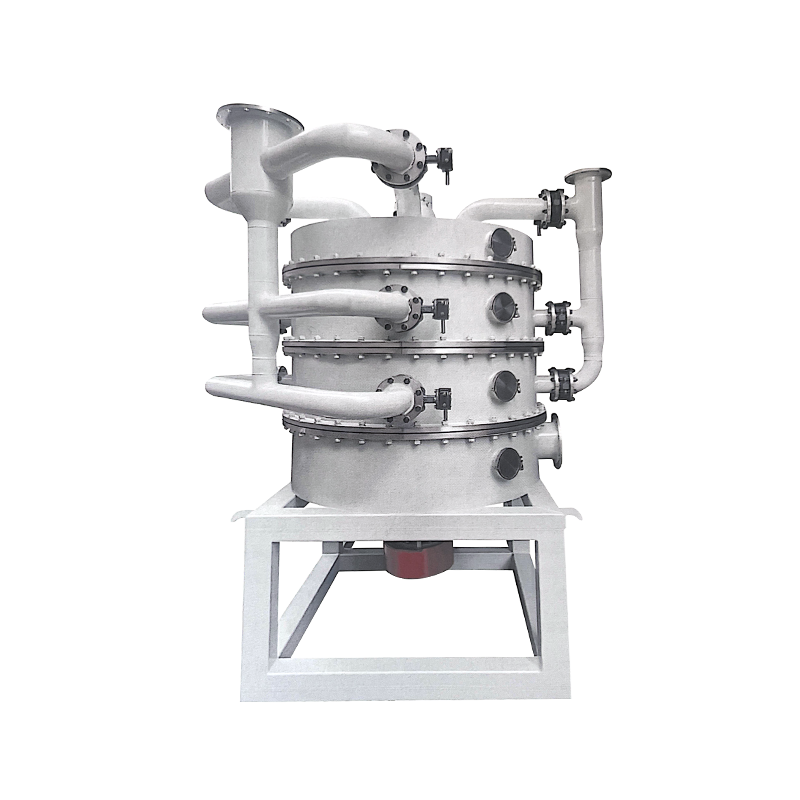
As manufacturers look for ways to reduce operating costs and improve production efficiency, evaporation technology is receiving increasing attention. An Evaporator is widely used in food processing, chemical production, pharmaceutical manufacturing, and industrial wastewater treatment. For buyers planning to upgrade their production lines, energy consumption, maintenance requirements, and material compatibility are important considerations. Choosing suitable equipment requires a clear understanding of actual operating conditions rather than simply comparing processing capacities.

Energy Consumption Matters in Daily Production
Evaporation involves heating liquids to remove moisture, which can create considerable energy demand during continuous operation. For industrial users, steam consumption and electricity costs directly affect production expenses.
Modern industrial evaporator systems can use multiple-effect evaporation or heat recovery technology to reuse thermal energy. When evaluating equipment, buyers should pay attention to steam requirements, power consumption, heating efficiency, and opportunities to recover waste heat from existing processes.
MVR Technology Improves Heat Utilization
Mechanical Vapor Recompression (MVR) is attracting interest from manufacturers seeking to reduce external steam consumption. This technology compresses the vapor generated during evaporation, increasing its temperature so that it can be reused as a heating source.
An MVR evaporator can be suitable for continuous industrial processes, including wastewater concentration and certain food or chemical applications. However, feed characteristics, boiling point, and electricity availability should be evaluated before selecting this configuration.
Preventing Fouling and Scaling Problems
Material buildup on heat transfer surfaces is a common challenge in evaporation operations. High concentrations of dissolved solids, suspended particles, and certain chemical components can cause scaling, reducing heat transfer efficiency and increasing maintenance requirements.
As an equipment manufacturer, we recommend evaluating feed composition, viscosity, and solid content before confirming the system design. These details help determine suitable circulation methods and operating conditions.
Cleaning and Maintenance Affect Production Stability
Frequent cleaning can interrupt production schedules, particularly in facilities processing sticky or concentrated liquids. For food and pharmaceutical applications, cleaning arrangements also need to meet relevant hygiene requirements.
A cleaning-in-place (CIP) system can simplify routine cleaning by allowing internal surfaces to be cleaned without extensive disassembly. Buyers should also consider material compatibility, inspection access, and the convenience of replacing wearing components.
Selecting the Right Evaporator for Different Materials
Different liquids require different evaporation methods. Falling film evaporators are often considered for heat-sensitive materials because of their relatively short residence time, while forced circulation systems may suit liquids with higher concentrations or scaling tendencies.
Before purchasing an industrial evaporator, buyers should confirm:
- Feed composition and viscosity.
- Required evaporation capacity.
- Temperature sensitivity of the material.
- Target concentration of the final product.
- Available installation space and energy supply.
These factors help ensure that the selected equipment matches actual production requirements.
Wastewater Treatment Creates Additional Applications
Industrial wastewater treatment is another important application of evaporation technology. Facilities handling high-salinity wastewater can use evaporation systems to reduce liquid volume and support water recovery.
When combined with crystallization or zero liquid discharge (ZLD) processes, an evaporator can become part of a broader wastewater management solution. Corrosion resistance, salt accumulation, and residue handling should be considered during system planning.
Equipment Selection Starts With Process Requirements
A suitable evaporation system should reflect the customer's materials, production capacity, energy conditions, and maintenance expectations. As a manufacturer, we focus on understanding these requirements before recommending an equipment configuration.
For businesses planning new installations or production upgrades, early technical communication can help avoid unnecessary operating difficulties. Choosing the right Evaporator means more than removing moisture; it means creating a stable process that supports production efficiency and manageable long-term operating costs.

Quick Links
Product Center
Contact Details
-
 +86-577-86997010
-
 +86-577-86997020
-
 [email protected]
-
[email protected]
-
 No. 155, Jifeng Road, High-tech Zone, Longwan District, Wenzhou, Zhejiang Province, China
SHARE


CONTACT US NOW
Copyright ©Zhejiang Xinchuangxing Technology Co.,Ltd. All Rights Reserved.
 Privacy Policy
Supergravity Equipment Manufacturers