

 En
En
 русский
 Español
 عربى
عربى

User Questions on Distillation Unit and Extraction Integration
 2026.01.23
Integrating a Distillation Unit with an Extraction Unit is a frequent topic of discussion among chemical engineers, process designers, and laboratory operators. When designing a separation workflow that combines liquid-liquid extraction with distillation, users often run into challenges such as matching feed composition, solvent recovery, and balancing energy usage. Questions about how to coordinate these two key separation technologies highlight the complexity of real-world process design and optimization.
At Zhejiang Xinchuangxing Technology Co.,Ltd., we understand that seamless interaction between extraction and distillation stages can greatly impact overall efficiency. Below, we address some of the more common integration questions and provide clear insights to help guide your system design and operation.
1. Why Integrate Extraction and Distillation at All?
Extraction and distillation are both essential separation techniques, yet they operate on very different principles:
Extraction units remove target compounds based on solubility differences between two immiscible phases.
Distillation units separate components by leveraging boiling point differences and controlled vaporization/condensation steps.
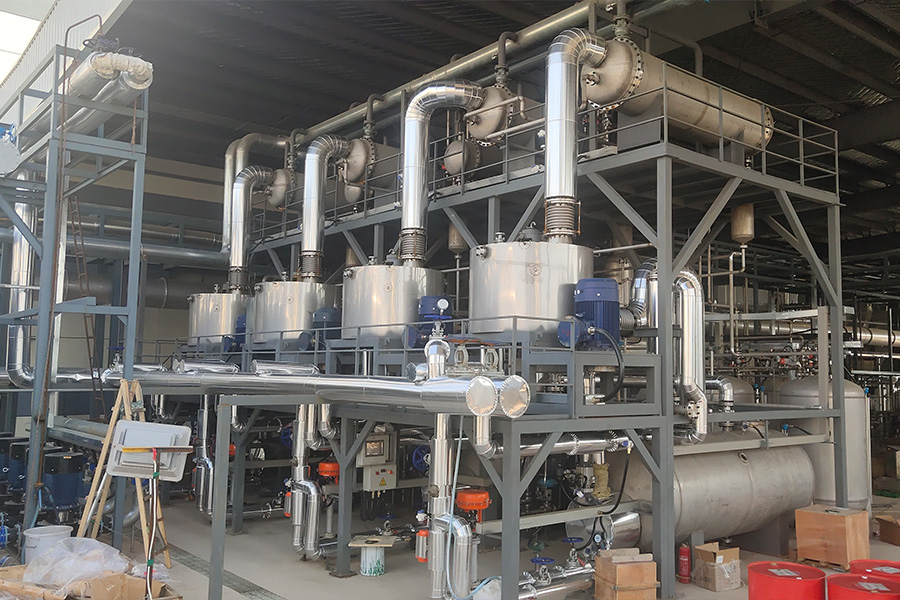
In many industrial scenarios, integrating the two can provide better purity or lower energy consumption than relying on either method alone. For example, after an extraction step, the distillation unit can focus solely on recovering solvent and concentrate product, which can reduce the load on the distillation column and improve separation efficiency downstream. Such integrated approaches are already explored in advanced strategies such as aqueous two-phase extraction followed by distillation for efficient compound recovery.
2. How Does Feed Composition Affect Integration Performance?
A frequent concern among users is how to ensure the output from an extraction unit properly matches the requirements of the subsequent distillation step. In practical terms:
If the extract contains high concentrations of solvent relative to the target solute, the distillation unit must operate with adjusted temperature and reflux settings.
Impurities or byproducts carried over from extraction can change the boiling behavior during distillation, requiring different control strategies.
Achieving a stable and consistent feed into the distillation unit often requires pre-conditioning steps such as phase separation, solvent recycling, or even intermediate filtration. Balancing feed composition is essential for predictable distillation behavior and consistent product quality.
3. What Are Common Integration Challenges and Solutions?
From process simulation questions to design queries, several specific challenges frequently arise:
Choosing the right entrainer or solvent: In extractive distillation, the choice of solvent or entrainer affects relative volatilities and separation effectiveness. Simulation tools (like RADFRAC blocks in process software) can help model these effects and aid design decisions.
Handling azeotropes: Some mixtures form azeotropes that hinder simple separation. Integration with extraction units can break azeotropic limitations by altering the feed composition before distillation.
Energy usage: Coordinating heat integration between the extraction and distillation stages (such as preheating feeds using waste heat) can reduce energy demands and improve sustainability.
Real-world cases show that careful selection of operating parameters (e.g., solvent ratios, reflux settings, and feed temperatures) combined with simulation insights significantly improves integration results.
4. What Do Users Want to Know About Workflow Coordination?
Process engineers and lab operators often ask how to manage system complexity when two separation units work together. Key considerations include:
Phase balance: Extraction phases should be clearly separated before entering a distillation unit to avoid foaming or phase carryover problems.
Process control: Automated monitoring of temperature, pressure, and composition at both extraction and distillation stages enables faster response to fluctuations.
Recycle loops: Solvent recovery loops can bring efficiency gains but require careful engineering to manage material balances and avoid accumulations.
These questions reflect deeper operational concerns, such as how to synchronize the timing and output of one separation step with the control requirements of the next. Simulation and modeling tools combined with expert design reviews are valuable resources for resolving these issues.
5. Practical Tips for Operators Planning Integration
To help navigate integration challenges, consider the following actionable tips:
Start with clear design targets: Define desired purity levels, throughput, and energy constraints before designing the combined workflow.
Use staged simulation and testing: Simulate extraction and distillation units both individually and together to understand sensitivities and optimize parameters.
Focus on control strategy: Well-tuned instrumentation and feedback control enhance reliability and reduce variability between batches.
By approaching integration with a structured plan and leveraging available modeling tools, many of the unpredictable issues can be minimized.
If you need more tailored advice, our team at Zhejiang Xinchuangxing Technology Co.,Ltd. can help with process evaluation and technical support to ensure both extraction and distillation stages operate smoothly in your system.

Quick Links
Product Center
Contact Details
-
 +86-577-86997010
-
 +86-577-86997020
-
 [email protected]
-
[email protected]
-
 No. 155, Jifeng Road, High-tech Zone, Longwan District, Wenzhou, Zhejiang Province, China
SHARE


CONTACT US NOW
Copyright ©Zhejiang Xinchuangxing Technology Co.,Ltd. All Rights Reserved.
 Privacy Policy
Supergravity Equipment Manufacturers