

 En
En
 русский
 Español
 عربى
عربى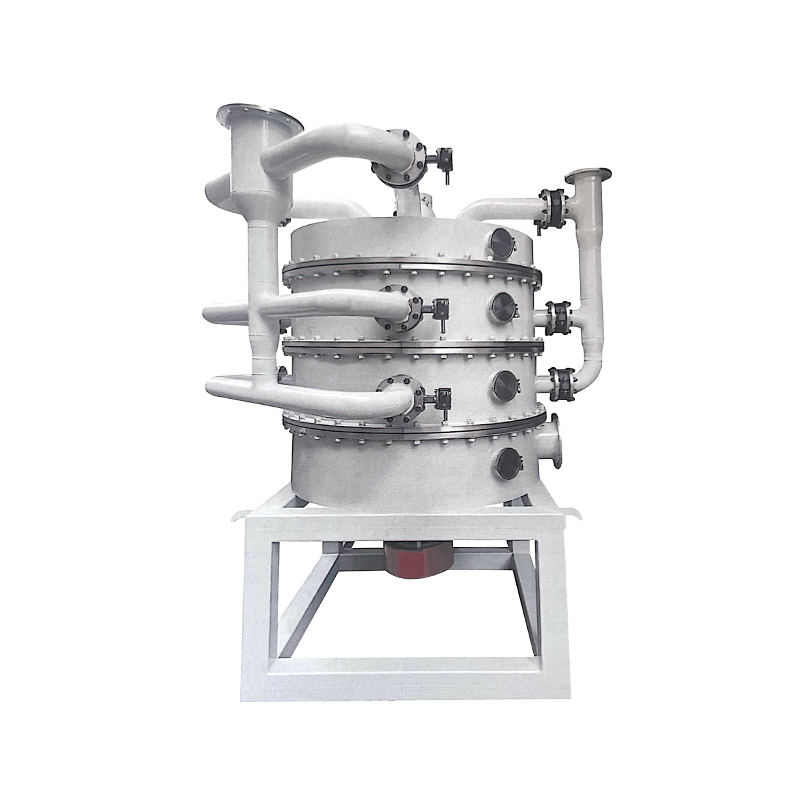

What Variables Influence High-Gravity Reactor Fluid Flow
 2026.05.01
Fluid dynamics within high-gravity reactors are critical for improving reaction efficiency, mass transfer, and overall system performance. High-Gravity Technology leverages centrifugal forces to intensify fluid mixing and contact between phases, while a properly configured High-Gravity Reaction System can precisely control flow patterns to achieve desired reaction outcomes. Understanding the key variables influencing fluid behavior is essential for engineers seeking to optimize reactor design and operation.
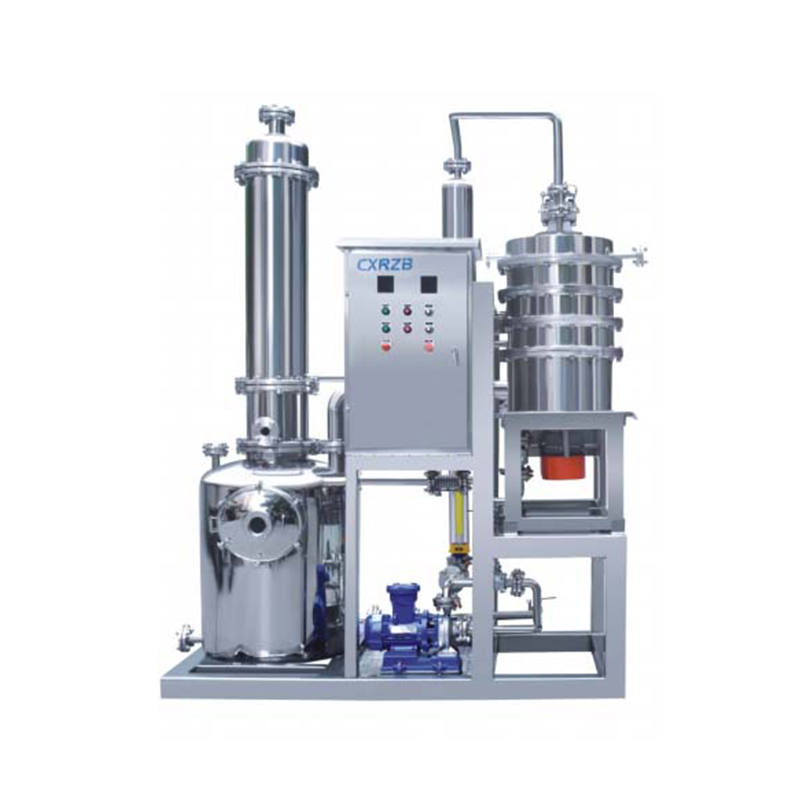
Zhejiang Xinchuangxing Technology Co., Ltd. has developed modular high-gravity reactor solutions that incorporate these variables into scalable designs, ensuring consistent performance across diverse chemical and environmental applications.
1. Centrifugal Force and Rotation Speed
Centrifugal acceleration, often represented as the gravity factor (β), is directly tied to the rotational speed of the reactor internals.
Higher rotational speeds increase shear and phase dispersion, promoting micro-scale fluid elements that enhance interfacial mass transfer.
Excessive rotation, however, can cause mechanical stress and energy inefficiency. Careful balancing ensures that the flow remains ideal without overloading the system.
Engineers often experiment with rotational speeds ranging from hundreds to several thousand RPMs, depending on the reactor’s packing radius and intended process.
2. Reactor Geometry and Packing Configuration
The shape and arrangement of reactor internals dramatically influence fluid behavior:
Structured Packing: Promotes thin liquid film formation, increasing contact area between reactants and enhancing mass transfer.
Packing Density: Higher packing density creates more interfacial surfaces but can increase pressure drop and reduce flow uniformity if over-compressed.
Rotating Bed Radius: A larger radius generates stronger centrifugal forces at a given rotation speed, affecting flow distribution across the reactor height.
Each of these geometric factors interacts with fluid properties to determine residence time, turbulence, and phase mixing efficiency.
3. Feed Characteristics
Feed properties such as viscosity, density, and phase composition also play a significant role:
Viscosity: High-viscosity fluids resist dispersion and may require increased centrifugal forces or tailored packing to maintain effective flow.
Density Differences: In multiphase systems, larger density contrasts improve phase separation but can cause uneven distribution if not carefully managed.
Phase Fraction: The ratio of gas to liquid or immiscible liquids determines how micro-bubbles or droplets are generated and maintained within the reactor.
These variables must be considered during design and operation to maintain uniform flow and prevent dead zones.
4. Flow Rate and Distribution
Feed flow rate directly affects fluid residence time and interfacial renewal:
Higher flow rates improve throughput but may reduce the time available for mass transfer, lowering reaction conversion.
Flow distribution: Uniform inlet and radial distribution of fluid is crucial for ensuring that centrifugal forces act evenly across all phases.
Zhejiang Xinchuangxing Technology Co., Ltd. addresses these concerns with precision-engineered inlet manifolds and adjustable feed modules to balance flow across high-gravity reactors.
5. Temperature and Pressure Conditions
Although often overlooked, thermal and pressure gradients can influence fluid viscosity, density, and phase behavior:
Elevated temperatures reduce viscosity, improving flow uniformity and interfacial contact.
Pressure variations affect gas-liquid interactions and micro-bubble formation, which are essential for reactions relying on gas absorption or stripping.
Control of temperature and pressure ensures that the fluid flow behaves as predicted, avoiding bottlenecks or flow instabilities.
6. Scale and Modular Design Considerations
Scaling up high-gravity reactors introduces additional flow challenges:
Maintaining uniform centrifugal acceleration across larger volumes requires careful adjustment of rotational speed and packing arrangement.
Module replication is often more effective than single large-scale units, as smaller reactors can preserve ideal flow characteristics while allowing flexible expansion.
These considerations allow engineers to implement high-gravity systems reliably in both pilot and industrial scales.

Quick Links
Product Center
Contact Details
-
 +86-577-86997010
-
 +86-577-86997020
-
 [email protected]
-
[email protected]
-
 No. 155, Jifeng Road, High-tech Zone, Longwan District, Wenzhou, Zhejiang Province, China
SHARE


CONTACT US NOW
Copyright ©Zhejiang Xinchuangxing Technology Co.,Ltd. All Rights Reserved.
 Privacy Policy
Supergravity Equipment Manufacturers