

 En
En
 русский
 Español
 عربى
عربى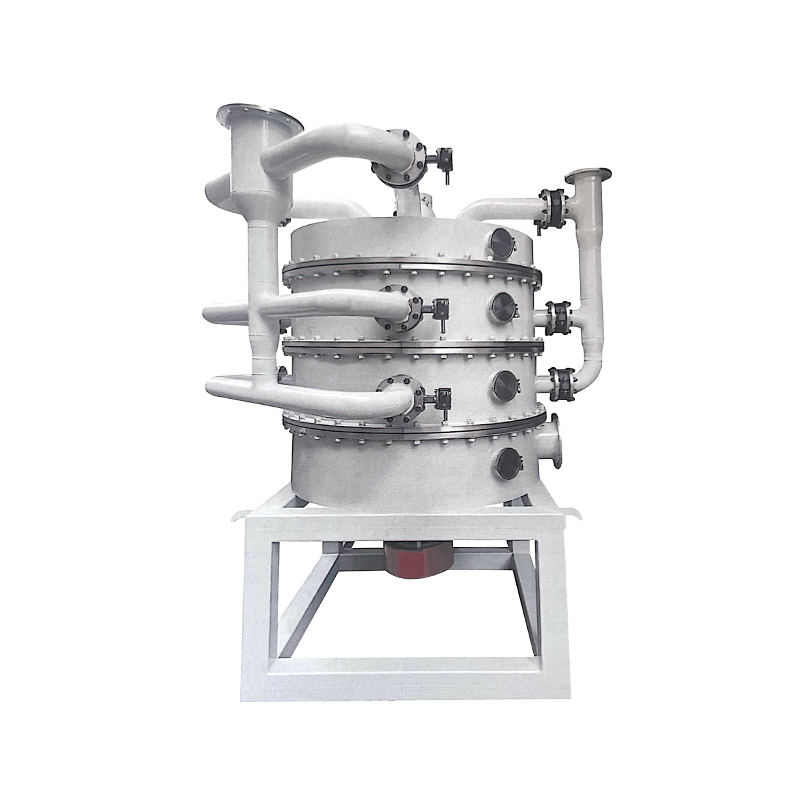

Does High-Gravity Technology Affect Pollutant Removal Performance
 2026.04.24
Recent developments in chemical and environmental engineering have highlighted the potential of High-Gravity Technology to transform traditional treatment processes. A High-Gravity Reaction System creates intense centrifugal forces that dramatically change how liquids, gases, and solids interact. These systems are increasingly explored for their impact on pollutant removal efficiency, providing new tools for industrial and municipal water treatment, as well as chemical processing applications.
1. Mechanisms Enhancing Pollutant Removal
High-gravity systems improve pollutant removal performance through several physical and chemical mechanisms:
Centrifugal Sedimentation:
Solids, sludge particles, and suspended contaminants experience higher effective gravity, causing faster settling and separation.
Increased Surface Contact:
Thin fluid films formed on spinning packing media expose more contaminants to reactive agents or adsorbents, accelerating reaction kinetics.
Improved Oxygen and Gas Transfer:
Gas-liquid interactions, essential for oxidation or biological processes, are intensified as micro-bubbles distribute evenly across the reactor.
Enhanced Mixing Efficiency:
High-gravity fields create turbulence and shear that break up boundary layers, allowing more uniform distribution of pollutants and treatment chemicals.
These mechanisms collectively enhance the removal of organic matter, heavy metals, phosphates, and other difficult-to-treat pollutants.
2. Performance Metrics in High-Gravity Systems
Key metrics for evaluating pollutant removal performance in high-gravity reactors include:
Removal Rate (%):
Observed removal rates can increase by 20–50% compared to conventional reactors for certain contaminants, depending on operational parameters.
Residence Time:
High-gravity reactors often achieve target removal in shorter reaction times, reducing tank volume requirements and energy costs.
By-product Formation:
Controlled micro-scale mixing minimizes overreaction or undesired side products, enhancing product purity in chemical treatments.
Zhejiang Xinchuangxing Technology Co., Ltd. has applied these metrics in pilot projects, calibrating rotation speed, packing density, and feed rate to optimize removal performance for various industrial effluents.
3. Reactor Design Considerations
To maximize pollutant removal, reactor design must account for:
Gravity Factor (β):
Determines the intensity of centrifugal force; higher β improves separation but increases mechanical stress.
Packing Geometry:
Structured packing affects liquid film formation, interfacial renewal, and mass transfer efficiency.
Flow Rate and Distribution:
Uniform fluid distribution ensures that all contaminated streams experience consistent high-gravity exposure.
Balancing these parameters allows operators to maintain high removal efficiency while minimizing wear, energy usage, and maintenance needs.
4. Case Applications
High-gravity technology has shown effectiveness in a range of applications:
Industrial Wastewater Treatment:
Metal plating or chemical process effluents benefit from faster precipitation and adsorption in RPB-style high-gravity reactors.
Municipal Water Treatment:
Nutrient removal, especially phosphates and nitrates, is accelerated due to improved phase contact.
Advanced Oxidation Processes:
Integration of high-gravity fields with ozone or hydrogen peroxide treatments increases reaction rates and pollutant breakdown efficiency.
These practical applications illustrate how high-gravity reactors are not merely laboratory curiosities but viable solutions for real-world pollutant management.
5. Benefits Beyond Pollutant Removal
In addition to improved removal performance, high-gravity systems provide:
Compact Footprint:
Smaller reactor volumes and faster reaction rates reduce facility space requirements.
Operational Flexibility:
Systems can handle variable wastewater compositions and adapt to changing influent conditions.
Energy Efficiency:
Reduced residence times and improved reaction kinetics often lower total energy consumption, offsetting the power needed for rotation.
Zhejiang Xinchuangxing Technology Co., Ltd. emphasizes modular high-gravity reactors, allowing clients to integrate these benefits into existing facilities without extensive infrastructure changes.
The impact of High-Gravity Technology on pollutant removal performance is significant. By enhancing sedimentation, interfacial contact, mixing, and gas-liquid interactions, a High-Gravity Reaction System can improve efficiency, reduce treatment time, and minimize by-product formation. With thoughtful reactor design and operational control, high-gravity systems offer practical and scalable solutions for industries and municipalities seeking more effective contaminant management. The ongoing work by Zhejiang Xinchuangxing Technology Co., Ltd. highlights the real-world applicability of these systems, bridging scientific innovation and industrial practice.

Quick Links
Product Center
Contact Details
-
 +86-577-86997010
-
 +86-577-86997020
-
 [email protected]
-
[email protected]
-
 No. 155, Jifeng Road, High-tech Zone, Longwan District, Wenzhou, Zhejiang Province, China
SHARE


CONTACT US NOW
Copyright ©Zhejiang Xinchuangxing Technology Co.,Ltd. All Rights Reserved.
 Privacy Policy
Supergravity Equipment Manufacturers