

 En
En
 русский
 Español
 عربى
عربى

Can Existing Pumps Provide Adequate Tank Mixing
 2026.05.29
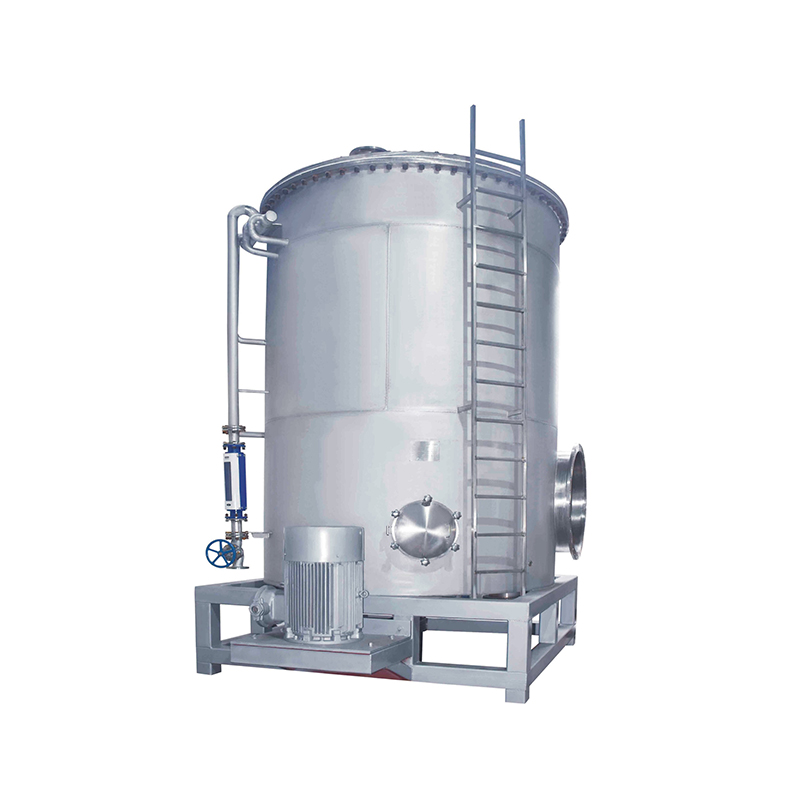
Efficient tank mixing has become a crucial consideration for manufacturers across the food, pharmaceutical, and chemical industries. Proper agitation ensures uniform product consistency, reduces processing time, and improves quality control. Our company has evaluated multiple approaches for improving tank performance, particularly in systems using a Mixing Tank or Sanitary Emulsification Tank, which are increasingly employed to handle sensitive liquids, pastes, and emulsions. While many facilities rely on existing pumps for circulation, understanding whether these pumps deliver sufficient mixing is critical to maintaining product integrity.
Assessing Pump Capabilities
Many facilities assume that standard recirculation pumps provide adequate flow for homogenization. However, the effectiveness of these pumps depends on several key factors:
- Flow Rate: A higher flow rate is necessary to achieve uniform mixing. For example, a 5,000-liter mixing tank may require a pump capable of circulating the tank volume at least 1–2 times per minute to ensure thorough blending.
- Pump Head: The vertical and horizontal resistance within the tank piping affects overall circulation. Low-head pumps may struggle to overcome baffles, valves, or long pipelines, resulting in dead zones where material remains stagnant.
- Viscosity Handling: High-viscosity liquids demand higher torque or specialized pump designs. Standard centrifugal pumps may fail to generate sufficient flow in thick emulsions, such as those processed in a Sanitary Emulsification Tank.
Our company has observed that pumps optimized for liquid transfer often underperform when tasked with true mixing operations, particularly in tanks designed for sensitive or viscous formulations.
Tank Geometry and Its Impact
The physical design of the tank also influences pump efficiency:
- Baffles: Properly installed baffles reduce vortex formation, directing the flow to maximize homogenization. Existing pumps may need higher flow rates to compensate for baffle-induced resistance.
- Tank Diameter and Height: Large-diameter tanks require stronger pumps or auxiliary recirculation loops to maintain uniform agitation at the bottom, where solids can settle. Taller tanks may demand more pump head to push fluid vertically, especially if the mixing point is elevated.
- Impeller Placement: In tanks equipped with mechanical agitators, the pump should complement the impeller’s action, circulating fluid efficiently without creating short-circuit flow paths.
Evaluating these parameters is essential before assuming that an existing pump can maintain uniform mixing throughout the tank volume.
Energy Efficiency and Cost Considerations
Operating existing pumps at higher speeds to achieve adequate mixing may cause increased energy consumption and premature wear. Our company recommends analyzing pump efficiency curves alongside the tank’s mixing requirements. In some cases, smaller, high-efficiency auxiliary pumps or variable-speed drives can deliver better performance at lower operational costs.
- Power Ratings: Pumps in the 3–15 kW range are common for small to medium sanitary tanks, while larger emulsification systems may require 20–50 kW pumps to circulate viscous blends effectively.
- Variable-Speed Drives: Adjustable-speed pumps allow fine-tuning of flow without oversizing the pump, reducing energy waste and minimizing shear stress on delicate emulsions.
- Maintenance and Longevity: Operating a pump beyond its ideal flow range accelerates mechanical wear. Proper sizing for mixing, rather than general circulation, enhances long-term reliability.
When Existing Pumps Fall Short
Our company has identified several indicators that current pumps may not provide adequate tank mixing:
- Visible Layering or Separation: In emulsions or suspensions, if stratification occurs within minutes, pump circulation is insufficient.
- Inconsistent Temperature or Additive Distribution: Hot-fill or chemical dosing processes rely on uniform mixing; uneven results indicate that pump action is inadequate.
- Extended Processing Times: If achieving homogeneity takes longer than expected, additional pump capacity or tank modifications may be necessary.
Solutions often involve upgrading to high-shear pumps, integrating mechanical agitators, or installing recirculation loops with bypasses that allow controlled flow through the Sanitary Emulsification Tank.
Optimizing Tank Performance
To achieve the ideal results without replacing the entire system, our company advises:
- Flow Analysis: Measure pump flow against tank volume to determine turnover rate.
- Viscosity Testing: Assess fluid properties at operating temperature to match pump capability.
- Tank Modifications: Add baffles, mixing nozzles, or recirculation loops to improve flow patterns.
- Pump Upgrades: Consider high-shear or positive displacement pumps for viscous or sensitive products.
- Automation Integration: Implement sensors and flow meters to monitor mixing efficiency in real time.
By carefully evaluating these factors, manufacturers can often achieve adequate mixing with existing pumps or identify minimal upgrades required for ideal performance.

Quick Links
Product Center
Contact Details
-
 +86-577-86997010
-
 +86-577-86997020
-
 [email protected]
-
[email protected]
-
 No. 155, Jifeng Road, High-tech Zone, Longwan District, Wenzhou, Zhejiang Province, China
SHARE


CONTACT US NOW
Copyright ©Zhejiang Xinchuangxing Technology Co.,Ltd. All Rights Reserved.
 Privacy Policy
Supergravity Equipment Manufacturers