

 En
En
 русский
 Español
 عربى
عربى

Extraction Unit Working Principles in Industrial Chemical Processing
 2026.06.05
In industrial chemical processing environments, separation and purification stages play an essential role in ensuring material quality and process stability. Within this framework, the Extraction Unit and the Distillation Unit are commonly applied systems used for separating components based on different physical and chemical properties. These two systems are often integrated into broader process flows, depending on production requirements and material characteristics.
An Extraction Unit is widely used for transferring selected compounds from one phase to another using a suitable solvent system. A Distillation Unit, on the other hand, relies on differences in boiling points to achieve separation through vaporization and condensation cycles. Both systems serve different purposes but may appear in similar industrial workflows, particularly in chemical, pharmaceutical, and material processing environments.
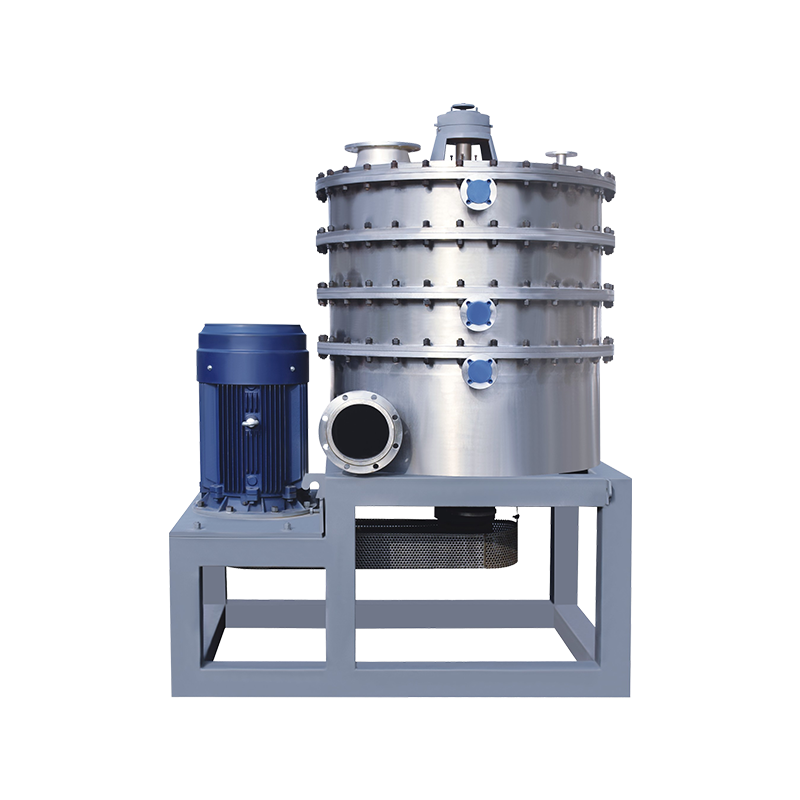
Fundamental Mechanism of Extraction Unit
The working principle of an Extraction Unit is based on liquid-liquid or solid-liquid mass transfer. In a typical process, a feed mixture is contacted with a solvent that has a selective affinity toward targeted compounds. During this interaction, components redistribute between two immiscible phases.
The driving force behind this transfer is the difference in solubility and chemical affinity. Components that show higher solubility in the solvent phase migrate into it, while other components remain in the original phase. This phase separation allows the desired material to be isolated in a controlled manner.
In industrial operations, the efficiency of this process is influenced by contact time, mixing intensity, and phase separation clarity. Equipment design often includes structured mixing zones followed by settling sections to ensure adequate phase disengagement.
Structural Configuration of Extraction Systems
Extraction systems can be designed in several configurations depending on process scale and material type. Common industrial configurations include mixer-settler arrangements, column-based systems, and centrifugal separation units.
Mixer-settler systems operate through sequential mixing and settling chambers, allowing repeated contact stages. Column systems enable continuous contact between phases, often improving processing stability in large-scale operations. Centrifugal systems introduce mechanical force to accelerate phase separation, which is useful when rapid processing is required.
Each configuration provides different operational characteristics, and selection depends on process continuity, material sensitivity, and solvent recovery considerations.
Operating Stages in Extraction Processes
The operation of an Extraction Unit generally involves three main stages: mixing, separation, and solvent recovery.
During the mixing stage, the feed and solvent are combined under controlled conditions to promote mass transfer. The second stage involves phase separation, where gravity or mechanical force allows the two phases to disengage. The final stage focuses on recovering solvent for reuse and isolating the extracted component for further processing.
These stages are often arranged in multiple cycles to improve separation efficiency and ensure consistency in output composition.
Introduction of the Distillation Unit in Process Integration
A Distillation Unit is frequently integrated alongside extraction systems in chemical processing environments. While extraction focuses on selective solubility transfer, distillation separates components based on volatility differences.
In combined systems, extraction may be used for initial selective removal, followed by distillation to refine or purify the recovered material. This layered approach is common in processes where multiple impurities must be managed across different physical properties.
Key Factors Influencing Process Performance
Several operational parameters influence the behavior of an Extraction Unit. Solvent selection plays a central role, as it determines selectivity and separation clarity. Temperature conditions also affect solubility balance and phase behavior.
Flow rate and contact duration are equally important, as they control the extent of mass transfer between phases. In addition, equipment geometry can influence mixing efficiency and phase separation stability.
For integrated systems involving a Distillation Unit, thermal conditions and pressure settings become additional variables that must be coordinated with upstream extraction steps.
Industrial Relevance and Application Scope
Extraction systems are widely applied in chemical synthesis, material purification, and intermediate processing stages. They are particularly useful when compounds cannot be separated efficiently through thermal methods alone.
In many industrial setups, the Extraction Unit and the Distillation Unit work in sequence to achieve layered separation goals. This combination allows operators to handle complex mixtures with varying physical properties.
The integration of both systems supports flexible process design and enables adaptation to different raw material compositions.

Quick Links
Product Center
Contact Details
-
 +86-577-86997010
-
 +86-577-86997020
-
 [email protected]
-
[email protected]
-
 No. 155, Jifeng Road, High-tech Zone, Longwan District, Wenzhou, Zhejiang Province, China
SHARE


CONTACT US NOW
Copyright ©Zhejiang Xinchuangxing Technology Co.,Ltd. All Rights Reserved.
 Privacy Policy
Supergravity Equipment Manufacturers