

 En
En
 русский
 Español
 عربى
عربى

Can Heat Exchanger Fouling Cause Production Disruptions
 2026.03.13
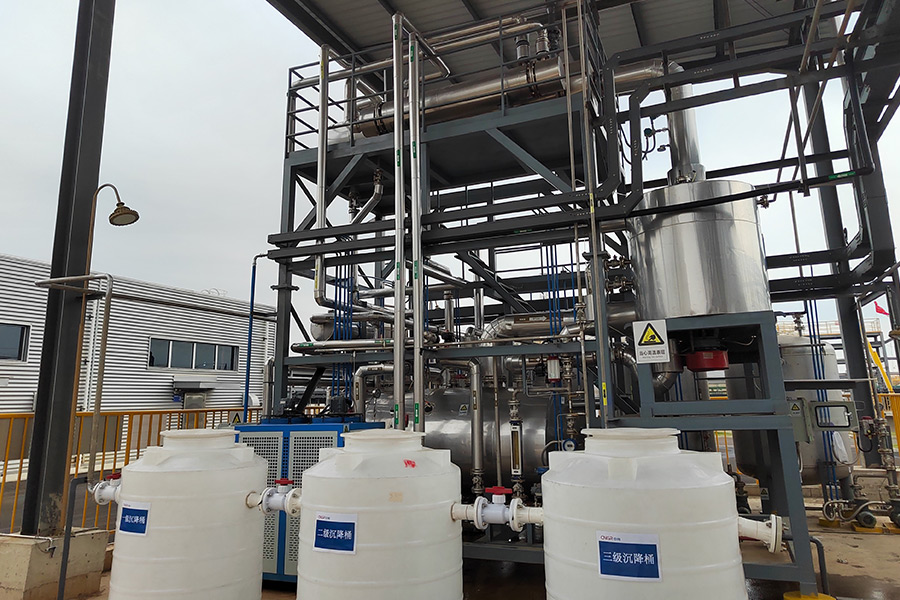
Many plant operators have asked whether fouling inside a Heat Exchanger can really disrupt production and what signs signal trouble before it becomes a costly problem. One real concern is that fouling doesn’t just reduce heat transfer efficiency — it can have a cascade effect on the entire thermal management chain including equipment like a Thermal Processing Unit. Users often report unexpectedly rising temperatures, increased energy use, and unplanned maintenance stops, all of which can tie back to fouling or related heat transfer problems.
At Zhejiang Xinchuangxing Technology Co., Ltd., we’ve seen that fouling and associated issues are among the top reasons industrial systems lose efficiency or interrupt operations, especially when heat exchangers are part of complex thermal units. Understanding why fouling occurs and how it affects system behavior is essential for reliable performance and preventing costly downtime.
What Is Fouling and Why Does It Matter?
Fouling refers to the accumulation of unwanted material on the surfaces where heat transfer should occur inside a heat exchanger. These materials can include mineral deposits, corrosion products, sediments, or even biological growth. This layer effectively acts as an insulating barrier that makes heat transfer less effective.
Because the basic function of a heat exchanger is to move heat efficiently from one fluid to another, any barrier on the surface directly interferes with this process. Over time, fouling can:
Slow down heat transfer rates
Increase pressure drop across the exchanger
Increase energy consumption
Cause uneven heating in connected systems like thermal processing units
This is more than a theoretical concern — industrial plants often see measurable performance losses before a full failure occurs.
How Fouling Leads to Production Interruptions
When fouling builds up, productivity can be affected in several ways:
1. Reduced Thermal Efficiency
As fouling increases, the efficiency of transferring heat drops. This means that the desired temperatures in processes controlled by a Thermal Processing Unit may be harder to maintain. For operations that rely on precise heat profiles for product quality or curing, this can mean off-spec products and wasted runs.
Even if temperature controllers are working, the heat exchanger may struggle to keep up because some of the heat is lost or blocked by the fouling layer. Over time, this forces systems to work harder just to achieve the same output.
2. Higher Energy and Operating Costs
Since fouling acts like insulation, the system needs to compensate by using more energy. This often shows up as higher utility costs or load on heating/cooling equipment. In lines where a thermal processing unit is downstream from the heat exchanger, this means extra energy is consumed to maintain process schedules.
3. Pressure and Flow Disruptions
Build-up inside the exchanger can restrict flow, resulting in higher pressure on pumps or uneven distribution of fluids. In harsh cases, this can force operators to slow down production or shut systems down for cleaning or maintenance.
A common diagnostic measure, temperature differential (ΔT), widens when fouling occurs because the heat transfer surfaces can’t absorb or release heat as designed. This is often one of the primary signs that fouling has reached a level affecting performance.
Typical Causes of Fouling
Fouling doesn’t happen overnight; it’s usually the result of fluid and operational conditions. Some typical contributors include:
High mineral content in fluids — dissolved salts or hard water minerals tend to precipitate on surfaces
Particulate matter in processing fluids — solid particles that settle and stick to surfaces
Biological contaminants — growths that develop in warm, moist environments
Chemical reactions — when fluid components react with metal surfaces or each other and form deposits
Understanding these causes helps operations managers better tailor cleaning schedules and filtration systems to their specific process conditions.
Mitigation Strategies and better Practices
Fouling doesn’t have to cause production disruption if it is managed proactively. Actionable strategies include:
Scheduled cleaning programs — depending on the severity of fouling, cleaning may be done chemically, mechanically, or with automated systems
Filtration upstream of the heat exchanger — reducing the amount of particulate or debris entering the system lowers fouling risk
Water or fluid treatment practices — conditioning fluids to minimize scale or buildup
Performance monitoring — tracking temperature differentials and pressure drops helps identify fouling before it reaches critical levels
Operators may also consider design options that minimize fouling potential, such as twisted tube patterns or self-cleaning technology.
Real World Impact: Efficiency to Reliability
For many industrial applications, especially those involving precise thermal control or high throughput, fouling isn’t just an inconvenience — it’s a risk to operational continuity. When a heat exchanger loses performance due to fouling, it can cause a ripple effect, impacting temperature control, energy use, and overall production throughput.
Understanding both the causes and mitigation tactics for fouling will help plant managers maintain consistent performance and avoid costly shutdowns. By combining routine maintenance with smart design and monitoring, disruptions can be minimized and systems can maintain high reliability.

Quick Links
Product Center
Contact Details
-
 +86-577-86997010
-
 +86-577-86997020
-
 [email protected]
-
[email protected]
-
 No. 155, Jifeng Road, High-tech Zone, Longwan District, Wenzhou, Zhejiang Province, China
SHARE


CONTACT US NOW
Copyright ©Zhejiang Xinchuangxing Technology Co.,Ltd. All Rights Reserved.
 Privacy Policy
Supergravity Equipment Manufacturers