

 En
En
 русский
 Español
 عربى
عربى

How Do Thermal Processing Units Handle Particle Flow Issues
 2026.03.27
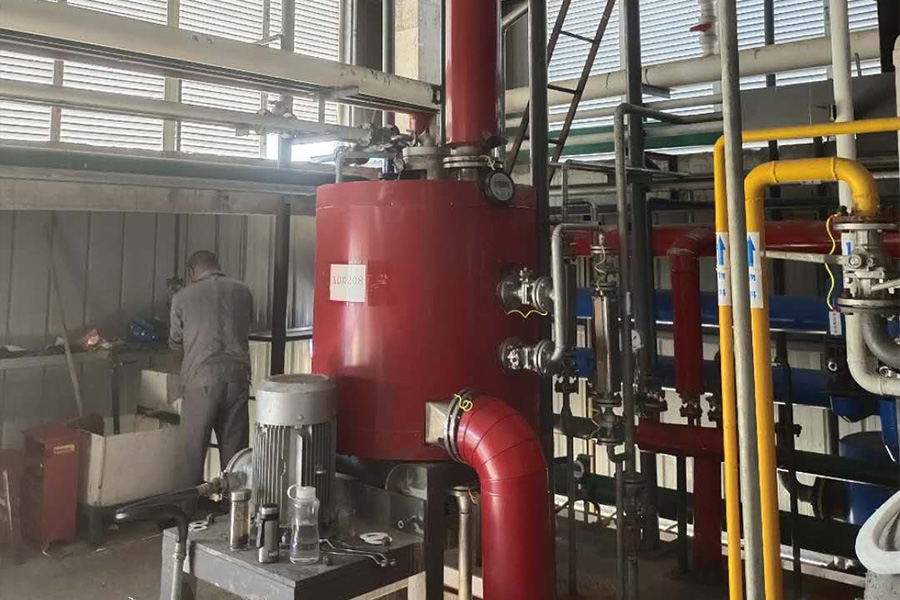
How exactly does a thermal system cope when particle flow becomes inconsistent, clogging or settling in the process? A Thermal Processing Unit that processes powders, granules, or solids must ensure a smooth and uniform movement of particles if it is to maintain heating consistency and throughput. Problems in solid flow don’t only affect the processing zone — they often propagate back to auxiliary components such as a Heat Exchanger, causing inefficiencies and unplanned maintenance.
These issues can be especially pronounced in industries handling bulk materials where particle deposition and fouling can alter flow behavior over time. Understanding these mechanisms — and how thermal processing equipment adapts to them — is key to improving reliability, reducing downtime, and maintaining product quality.
What Happens When Particle Flow Becomes Problematic
At a basic level, a thermal processing unit deals with particulate flow by moving particles through zones of controlled temperature to achieve a desired thermal effect — be it drying, curing, or heat treatment. Problems begin when particles don’t flow smoothly, which can occur when:
particles settle or bridge inside feeders or conveyors
fines or dust accumulate on surfaces
agglomeration causes clumping
flow channels narrow under thermal stress
When particles fail to move as designed, several effects emerge:
Uneven residence times — some particles are over-exposed to heat while others lag behind.
Hot and cold spots develop because uneven material flow changes thermal load patterns.
Equipment stress increases, especially on surfaces that interact with particle streams.
In heat exchanger surfaces and channels, these issues can also manifest as particulate deposition. Solid particles suspended in thermal media eventually settle on heat transfer surfaces, forming a build-up that impairs heat transfer effectiveness and can restrict flow paths over time.
How Equipment Is Designed to Cope
Thermal processing units address particle flow issues through both mechanical design features and operational strategies:
1. Controlled Feed Mechanisms
Feeder design is fundamental to stable particle flow. Vibratory feeders, screw conveyors, and controlled dosing equipment help maintain steadier flow rates by preventing bulk materials from arching, bridging, or sticking. These feed systems introduce particles at consistent rates into thermal zones, minimizing jumps or pauses that would otherwise alter heating efficiency.
In processes where particles vary in size or moisture content, controlled feed geometry and speeds are calibrated to accommodate these differences, keeping bulk material moving smoothly.
2. Flow Conditioning Zones
Some thermal processing units incorporate zones that condition the particle flow before entering critical heat zones. These may include:
Pre-heating buffer zones
Airflow agitation zones
Mechanical agitators or stirring elements
Such elements reduce local stalling or dead zones where particles might otherwise accumulate. In doing so, they also help avoid the build-up of heat gradients, which can damage product quality or strain the heat exchange system.
3. Temperature and Flow Feedback Controls
Modern units often use sensors to monitor flow behavior and temperature gradients in real time. These feedback systems help adjust operating conditions dynamically:
adjusting conveyor speed when flow slows
increasing agitation during dense regions
modulating thermal input to match live flow rates
By adapting in real time, systems can avoid many common problems that would otherwise result in shutdowns or manual intervention.
When Particle Flow Interacts with Heat Exchangers
A lesser-discussed but significant issue is the interaction between particle behavior and heat exchange surfaces. In many systems, particles that bridge or cling to surfaces contribute to particulate fouling, where solids accumulate on or near heat transfer walls, similar to what occurs in standard heat exchangers.
This deposition creates an insulating layer that:
reduces heat transfer efficiency
increases pressure drop across fluid channels
alters local flow dynamics
Fouling can also occur from precipitation of dissolved solids or chemical residues, further compounding issues on particle pathways and heat transfer surfaces.
To manage this, thermal processing units often leverage designs that encourage self-cleaning flow patterns, such as directional flow injectors, agitation paddles, or periodic purge cycles that dislodge particles from surfaces. Some systems also rely on temperature cycling — slight, controlled oscillation of thermal input — to reduce stickiness and discourage particle build-up.
better Practices for Smoother Particulate Flow
Operators can further minimize flow disruptions and keep thermal systems running effectively by implementing several proven strategies:
Optimize particle size distribution — too wide a range increases the odds of clumping or segregation during flow.
Use conditioned air or gas flows — gas movement can fluidize particles, reducing dead zones.
Regularly inspect and maintain feeders — addressing wear or friction points prevents flow resistance.
Integrate realtime monitoring — seeing where flow decelerates lets engineers adjust downstream conditions before issues escalate.
Thermal processing units face unique challenges when handling particulate materials. Particle flow issues — from bridging and settling to surface deposition — can reduce throughput, degrade quality, and impose extra workload on heat transfer components like Heat Exchangers. By marrying thoughtful mechanical design with smart sensors and responsive controls, many of these problems can be mitigated.
Proactive monitoring, adaptive control strategies, and flow-friendly mechanical designs help ensure that particle streams move uniformly through thermal zones. The net result is more reliable operations, reduced downtime, and better‐controlled thermal processing outcomes.

Quick Links
Product Center
Contact Details
-
 +86-577-86997010
-
 +86-577-86997020
-
 [email protected]
-
[email protected]
-
 No. 155, Jifeng Road, High-tech Zone, Longwan District, Wenzhou, Zhejiang Province, China
SHARE


CONTACT US NOW
Copyright ©Zhejiang Xinchuangxing Technology Co.,Ltd. All Rights Reserved.
 Privacy Policy
Supergravity Equipment Manufacturers